Chapter 4
Activity Report
2018

In this section, INREV describes the activities that took place under each of the focus areas. These activities were supported by the work of the relevant committees, in line with INREV’s priorities for 2018.
INREV’s Professional Standards programme works in close collaboration with the various INREV committees to develop and nurture a set of guidelines and standards for the European non-listed real estate market, with an increasing global focus. Topics in focus include corporate governance, financial and investor reporting, fee and expense metrics, performance measurement, due diligence, secondary markets and liquidity, and ESG.
A world first: Total Global Expense Ratio
In March 2018, we released for industry consultation the first globally comparable measure of fees and costs named Total Global Expense Ratio (TGER). This proposed global standard was designed to be simple, practical and to facilitate comparison and consistent reporting of fees and costs associated with investing and operating real estate vehicles in different regions. Over 40 companies provided a detailed response to the industry consultation, which ran between March 2018 and June 2018. Integration of TGER into the INREV Guidelines and joint global release is expected by 2020.
Global Definitions for a harmonised industry
Substantial progress was also made on the Global Definitions Database – a single depositary of definitions for the global real estate market – bringing enhanced visuals and a simplified navigation. The database was also enriched with fee and sustainability-related terms. At the end of 2018 the database included more than 500 definitions. INREV will continue to develop and add definitions as they are agreed upon at a global level with NCREIF, PREA and ANREV.
Revised DDQ more streamlined than ever
The Due Diligence Questionnaire (DDQ) remains INREV’s most popular tool, used by more than 60% of our members in 2018. With the support of the Due Diligence Committee, we have updated the DDQ structure and its content, to make it leaner, while still providing the level of detail needed at the different stages of the due diligence process. The updated DDQ was released for industry consultation in January 2018. We launched the new streamlined edition in July 2018 with translations of the questionnaire being rolled out in German and Japanese in October 2018. To further help members implement the template, we released an implementation kit, including a user manual and a change log.
Open end fund pricing study: First conclusions presented
In July 2018, we published, together with AREF, the first conclusions of an industry wide study conducted into open end fund pricing in Europe, aiming to foster greater consistency and clarity on pricing policies.
Building upon the foundations that were laid in phase one, we started phase two in September 2018 to explore more focused topics such as governance around pricing mechanisms and the interaction of secondary markets and pricing. These efforts are set to continue throughout 2019.
New insights to ensure open end fund liquidity
In December 2018 we released enhanced guiding principles on vehicle liquidity to include new insights on secondary trading. In addition, the global landscape section has been extended with highlights from local practices in the US. To continue to educate and assist in creating further liquidity in the market with the support of the committee we also released a Guide to Secondary Trading in February 2018.

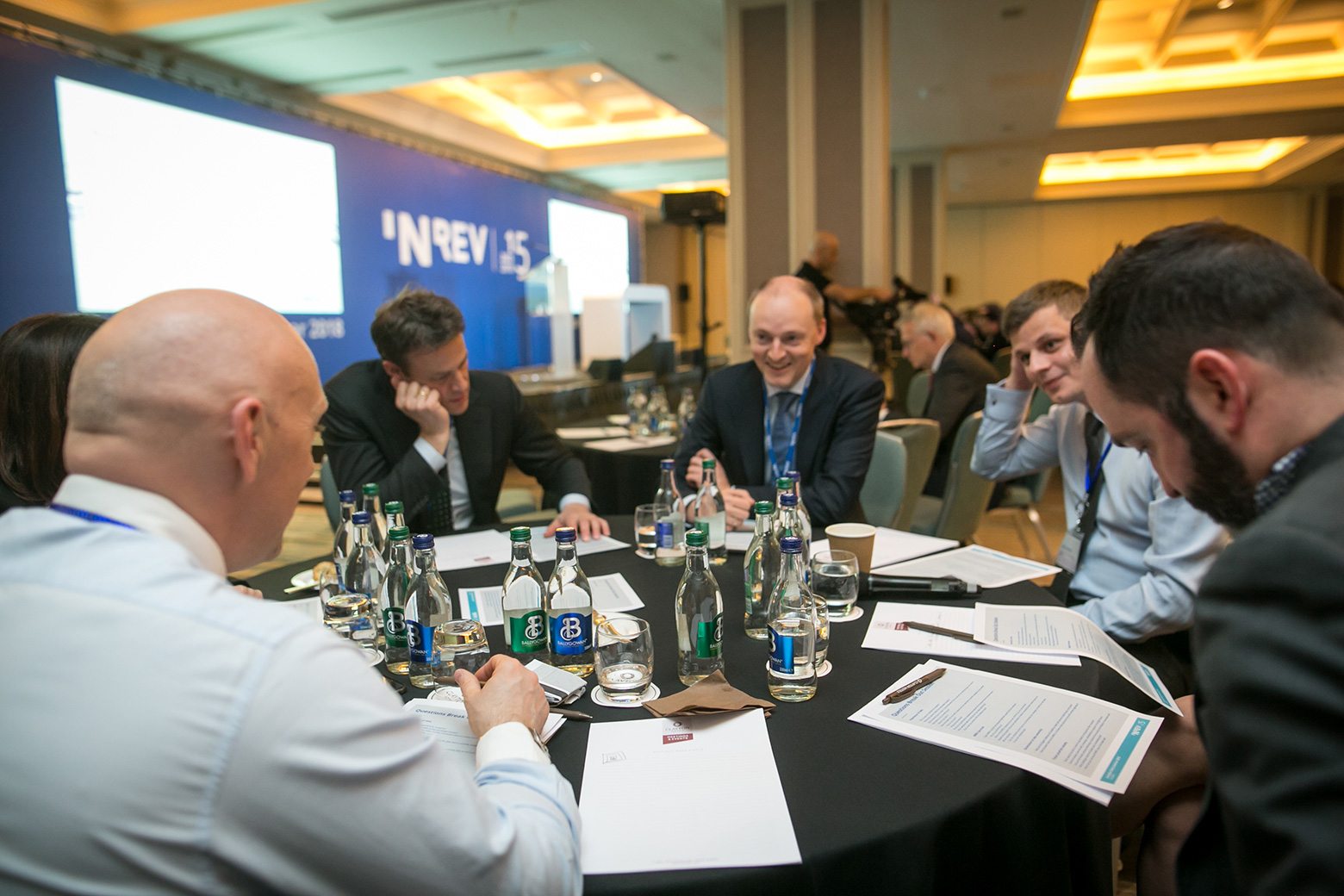
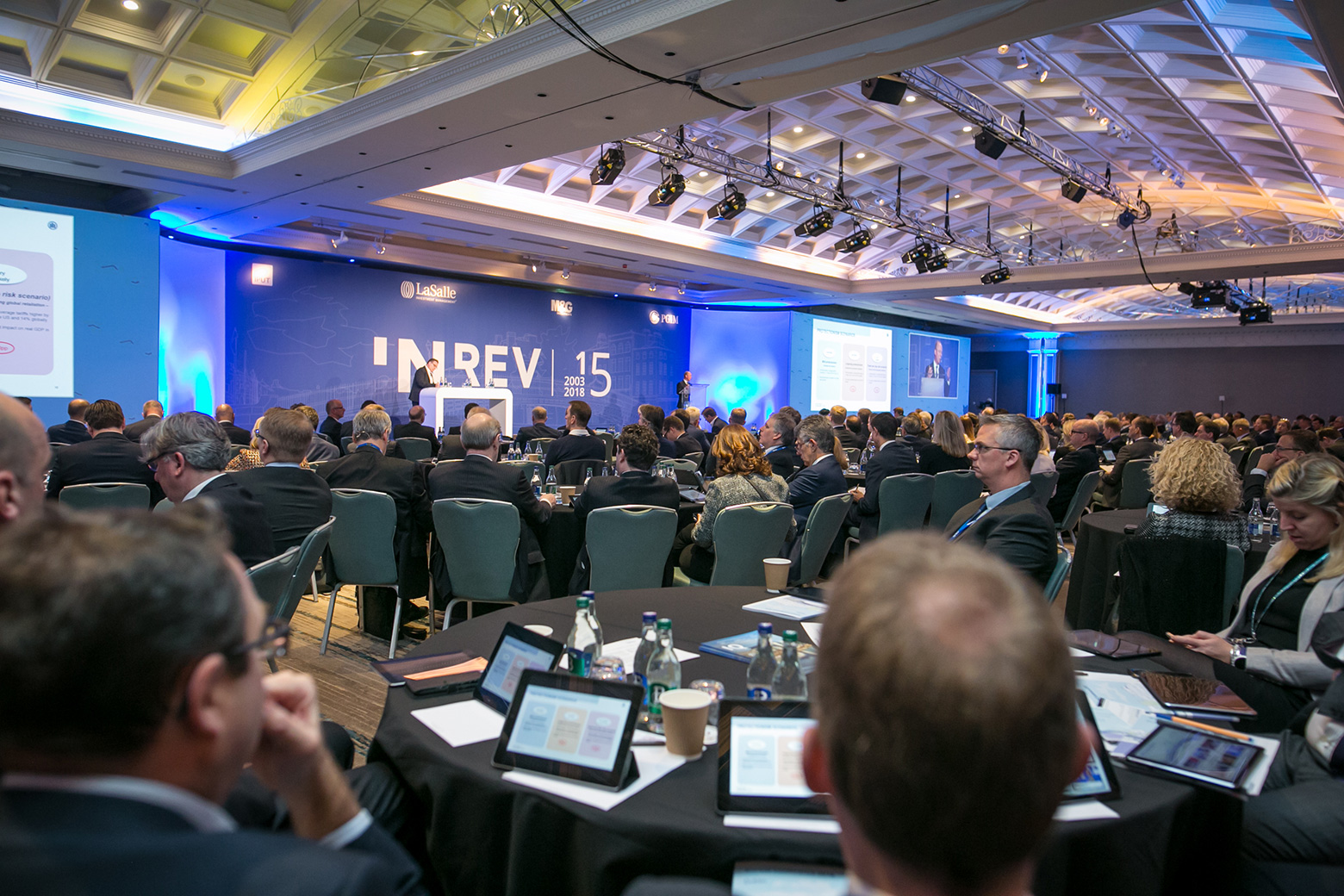
Delegates in discussion
ESG library goes global
In September 2018, we have consolidated the ANREV library and the INREV library of ESG-related resources to create a Global ESG Library for the non-listed real estate industry. Through the new Global ESG collaboration, members can now easily navigate and gain access to an evolving depository of featured reports, papers, and case studies ranging from a variety of geographic locations (most notably Europe, and Asia Pacific). The library includes over 40 publications and is growing monthly.
In 2019, we will continue to place more emphasis on exploring, promoting and sharing knowledge on ESG factors relevant to non-listed real estate by combining expertise of corporate governance and sustainability committees for a unified ESG view.
Tailored Guidelines for multiple vehicle types
To ensure that the INREV Guidelines remain as relevant as possible to all vehicle structures we introduced online filters for separate accounts, joint ventures and club deals, in addition to open end and closed end funds. This will make it easier than ever for members to select and focus on the guidelines that apply to the vehicle type they are most interested in. This project covered all the Modules within the Guidelines. In addition, topics such as corporate governance, liquidity and debt funds are expected to benefit from further tailoring in the coming years.
Corporate Governance Online Assessment updated
In December 2018, the questions in the Corporate Governance section were updated to fully align the assessment scoring system with the other modules. The format is now consistently applied elsewhere in the tool, making it easier to visualise and to compare results.
INREV's assessment tool lets managers measure their vehicles against industry best practice by determining its level of compliance with the INREV Guidelines.

* In partnership with NCREIF, PREA and ANREV
** Supported by Due Diligence Committee
*** In partnership with AREF
**** INREV Member Satisfaction Survey 2019


 Back to overview