

Autumn Conference 2025: Highlights
This year’s INREV Autumn Conference took place in the beautiful city of Venice on 24 and 25 November, bringing together almost 300 mid- to senior-level industry players and experts.
The conference theme ‘Under the weight of geopolitics: the new estate reality’, set the stage for a dynamic programme. Sessions covered critical topics impacting our industry, such as geopolitics and the global economy, how resilient real estate is in today’s evolving world, the future of office, Europe as a haven, the rise of AI and how physical risk is redefining insurance.
Delegates engaged with thought leaders, exchanged ideas, and left with actionable strategies to navigate a rapidly changing real estate landscape.
Fault lines: geopolitics and the global economy (Mehreen Khan)
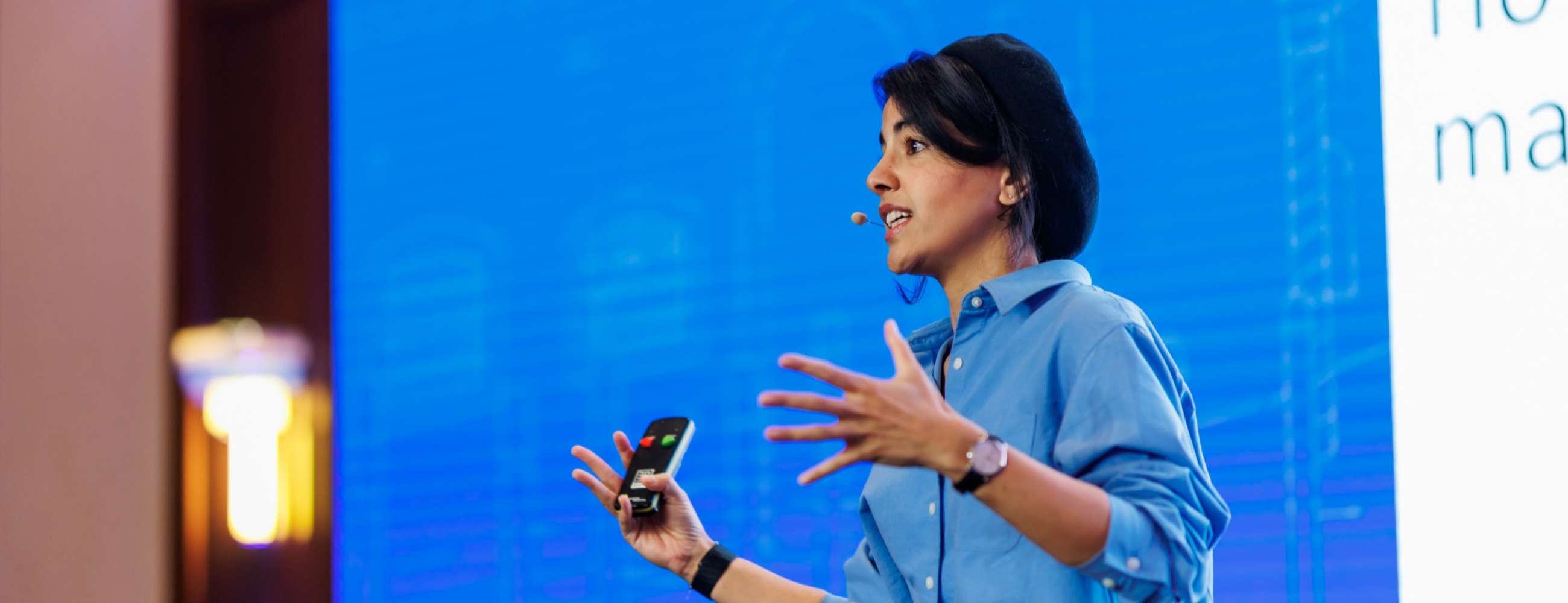
Mehreen Khan, Economics Editor at The Times, opened the conference by painting a vivid picture of today’s global economy. She described a world reshaped by trade realignments, technological disruption, and shifting power dynamics, arguing that we are now living in a ‘post-tariff world’.
The US remains central to global developments. Tariffs, while inflationary- with cost increases passed onto consumers - generate substantial revenue for the US government of around $350 billion, making them hard to unwind. Meanwhile, the rise of AI has created a ‘K-shaped’ economy, where some sectors and populations benefit disproportionately, while others lag behind. Mehreen Khan warned that the social and political consequences of these divergences could become apparent as soon as the US mid-term elections.
The great power rivalry between the US and China is also reshaping Europe’s strategic options. With only 45% of world trade remaining if these two powers are out, Europe cannot afford to be passive. Europe faces choices: cooperate, collaborate or retaliate.
For real estate investors, a slowdown in the US could shift capital flows toward Europe, and the deregulatory agenda could lead to more competitiveness.
Mehreen concluded her opening session by stating, ‘Hard power is back, might is back, and the European Union is finding it very difficult to position itself.’
Audience poll:
Which nation/region do you believe has the most effective geopolitical influence in the world today?
- United States - 58%
- China - 36%
- Europe - 2%
- Other - 4%
Which macro trend poses the greatest risk to real estate today?
- High interest rates & inflation - 25%
- Tight credit conditions/difficulty sourcing debt - 3%
- Slowing economic growth - 19%
- Geopolitical risk and its economic consequences - 46%
- Financial market volatility - 7%
From resilient real estate to security-driven demand (Justin Curlow)
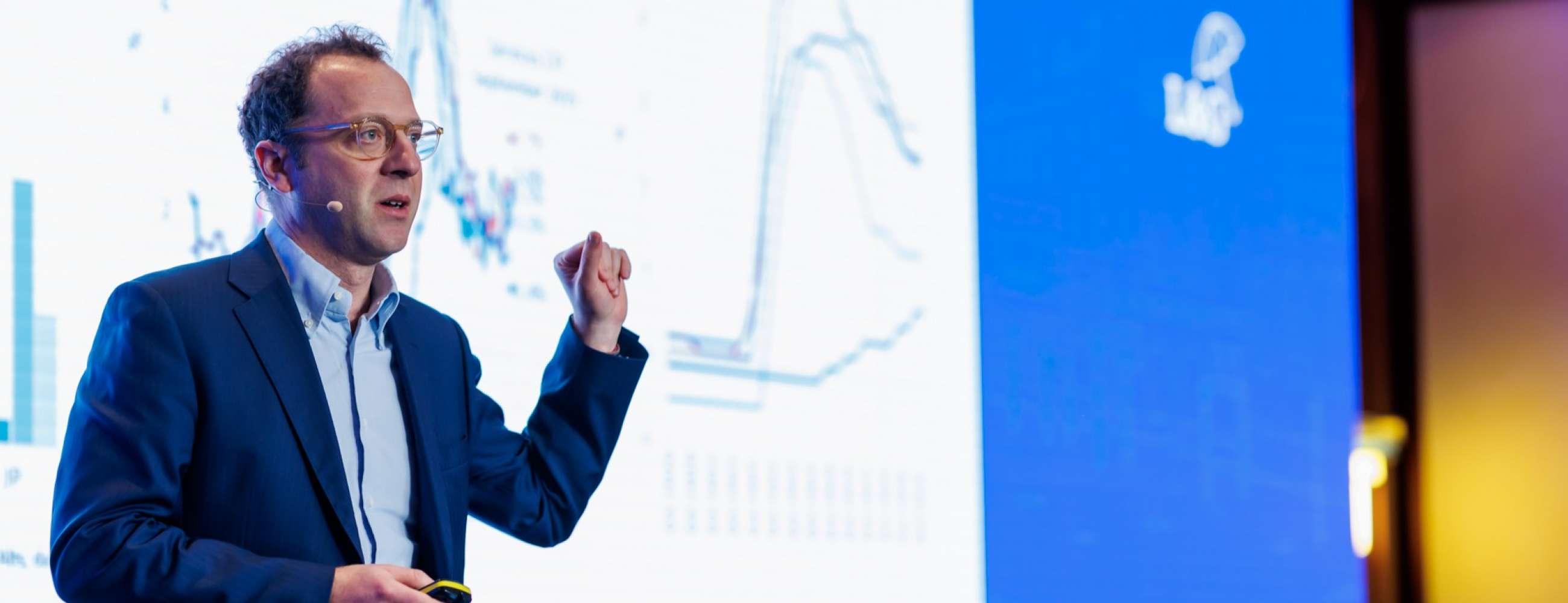
Justin Curlow, Global Head of Research and Strategy at AXA IM Alts took the stage to examine how real estate itself is adapting to geopolitical and technological changes. He was optimistic about Europe, but clear that transformation takes time. ‘The US is not investible at the moment,’ he stated. ‘Patience is a virtue, and Europe has a critical role to play.’
To reshape the European economy, we need to stop importing cheap goods from China, using Russian energy and relying on the US for defence. Defence is the next big growth driver for Europe, but again, that’s going to take time and patience.
European fundamentals are currently more resilient than in the US. It’s not just going to be beds and sheds - although they still matter. We need to renew the stack, especially in the office sector. Prices are going up, debt is back, and diversification is a tremendous opportunity. In this evolving landscape, Justin ended his presentation by reminding delegates, that core is king.
Audience poll:
Which region do you believe offers the best economic growth prospects over the next 12–24 months?
- United States - 37%
- Europe - 13%
- Asia - 42%
- Other - 8%
Which region do you believe will deliver the best property investment returns over the next 12–24 months?
- United States - 27%
- Europe - 57%
- Asia - 14%
- Other - 3%
Office politics: hybrid, return or reinvention? (Ignacio de la Torre)
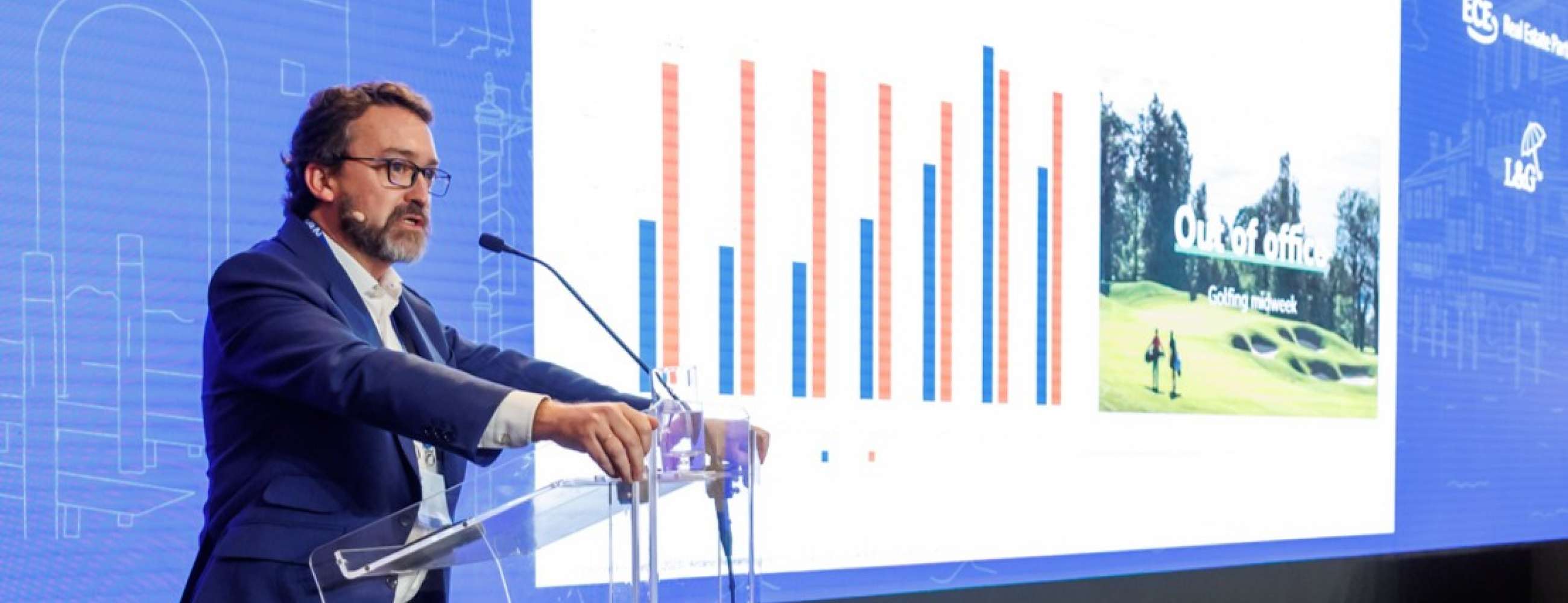
After a morning coffee break, Ignacio de la Torre, Partner and Chief Economist at Arcano guided the audience through the evolving world of office. Using playful data, he pointed out that US golf club usage has soared 83% since the pandemic — a curious indicator of shifting remote work patterns. But he quickly refocused on what really matters: productivity, collaboration, and office design.
Europe’s growth prospects remain stronger than the US, particularly in consumption-driven economies. Yet hybrid work comes with hidden costs: productivity at home often lags behind the office, and crucial face-to-face interactions shape career progression, whether that’s by the coffee machine or in the smoking area.
Ignacio’s research showed that open plan offices, while popular, can lead to distraction – whereas private or semi-private spaces can improve productivity by 10 to 15%.
The message was clear: offices are not disappearing, they are being redefined. Investors and investment managers must focus on spaces that foster communication, creativity, and well-being.
Audience poll:
Do you smoke?
- Yes - 3%
- No - 84%
- Occasionally / socially - 13%
- I vape instead - 1%
How do you think the average office sq m per employee in Europe will change in the next 3 years?
- Increase - 28%
- Decrease - 33%
- Stay about the same - 39%
Smarter, faster, greener: real estate's AI era (Jonathan Hannam)
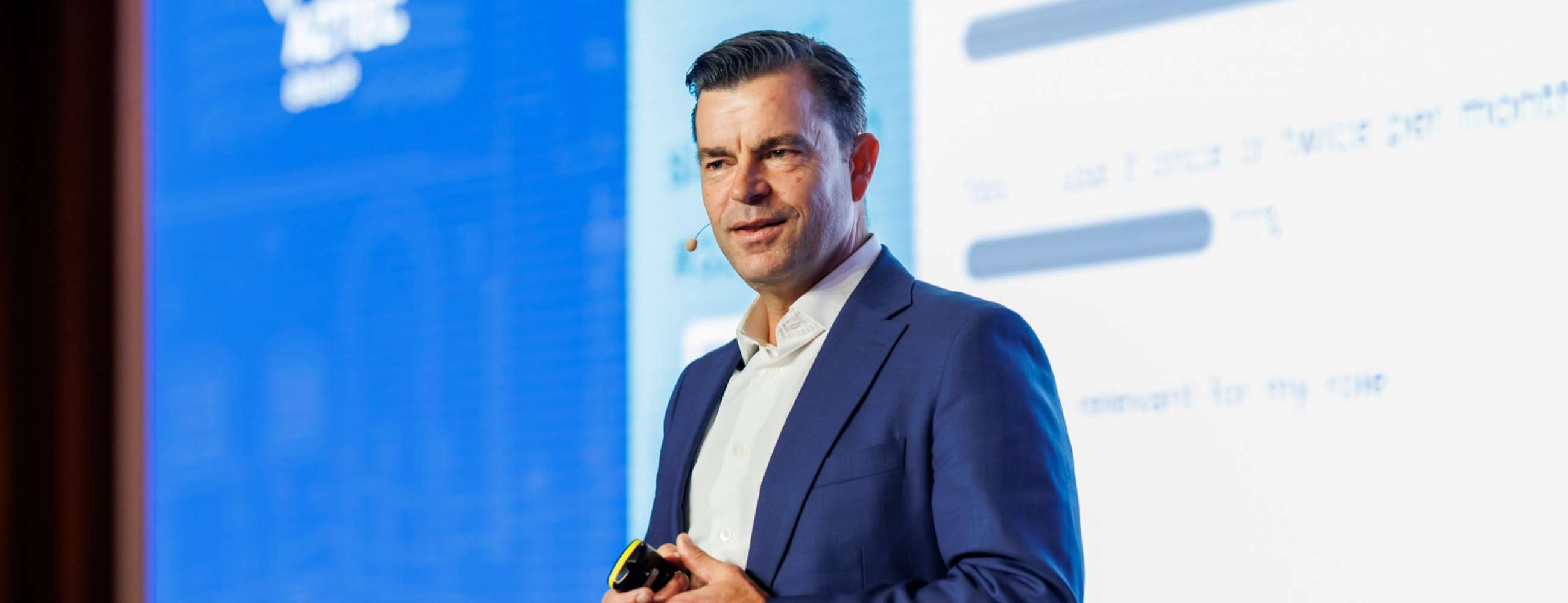
Jonathan Hannam, Co-Founder and Managing Partner at Taronga Group captured the audience’s imagination with real-world examples of AI in action. Using a green analogy, he explained that AI is an entire forest, with tools like ChatGPT representing just one sophisticated tree whose roots are rapidly strengthening.
AI’s impact is tangible across investment and operations. It can improve decision-making, streamline processes, enhance valuation and risk assessment, and even optimise building design. But Jonathan cautioned about potential pitfalls: data bias, privacy risks, over-reliance, workforce challenges, and the risk of losing creativity.
In Europe, AI is already being applied to smart water systems that detect leaks before damage occurs, thermal monitoring to boost energy efficiency, and reality-capture technology in construction. Early adopters stand to gain strategic and competitive advantages, but careful oversight and verification remain essential.
Audience poll:
How do you view AI’s impact on your business over the next 3–5 years?
- Major opportunity - 43%
- Moderate opportunity - 49%
- Neutral - 4%
- Moderate threat - 4%
- Major threat - 0%
Where is your organisation in its AI adoption journey?
- Just exploring / early experimentation - 20%
- Small pilots underway - 22%
- Moderate adoption in selected teams - 29%
- Broad, company-wide adoption - 27%
- No plans to adopt AI - 1%
Europe as a haven: unlocking the real estate advantage (Mathieu Elshout, Chris Lankin and Achal Gandhi)
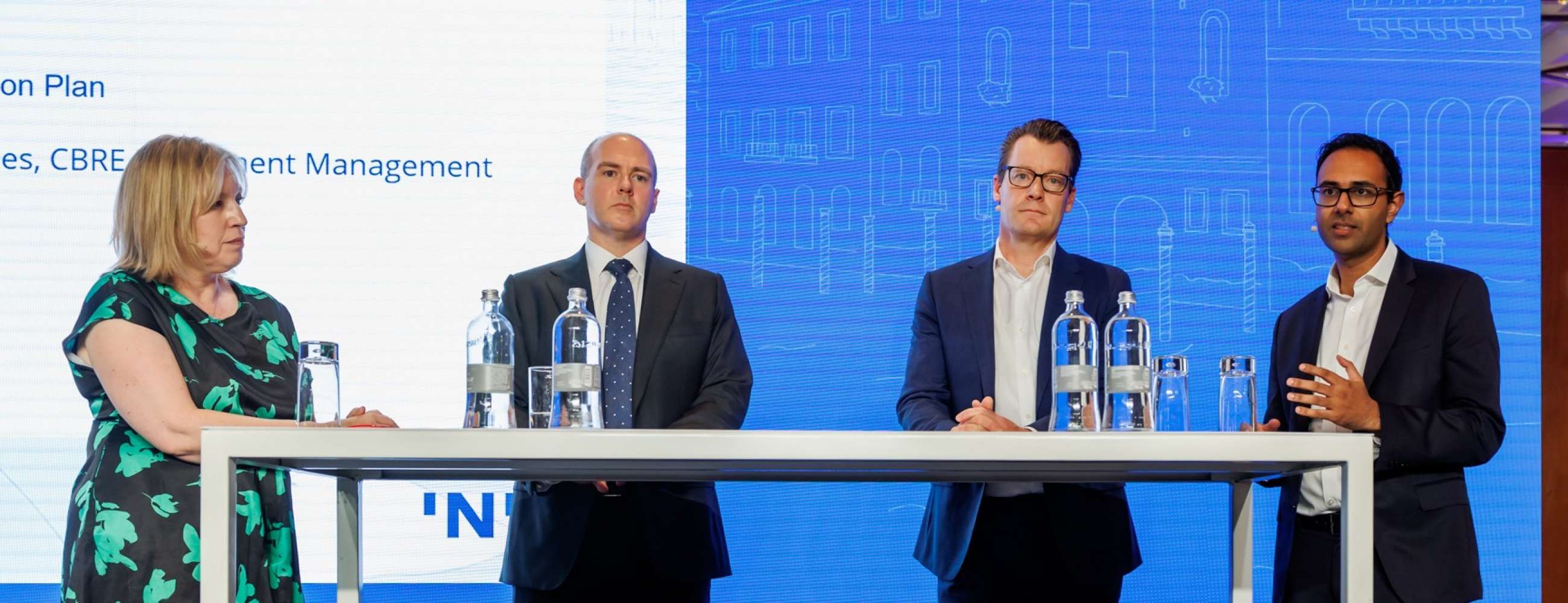
A panel moderated by Andrea Carpenter explored why Europe is increasingly seen as a safe harbour for global capital. Panellists Mathieu Elshout from Aware Super, Chris Lankin from Ontario Teachers’, and Achal Gandhi from CBRE IM Indirect discussed market sentiment, shifting capital flows and sector and location opportunities.
Europe is seen as a market offering some of the most attractive risk-adjusted returns globally. While the panel acknowledged challenges, the region shows ‘more green lights than others’, and the current interest rate environment makes a positive story. China’s illiquidity has made it essentially uninvestible, leaving Australia and Japan as the only viable options in Asia. In contrast, the US faces greater volatility than Europe, stopping investors from deploying large amounts of capital.
Many global investors are shifting away from traditional fund structures toward joint ventures and co-investments, seeking flexibility and strategic alignment. The panel explored opportunities across offices, retail, and living sectors, with Spain’s student accommodation and living markets drawing particular attention. Defence-driven logistics and residential projects may also emerge as attractive niches.
Climate reality: how physical risk is redefining insurance (Steffen Hinss)
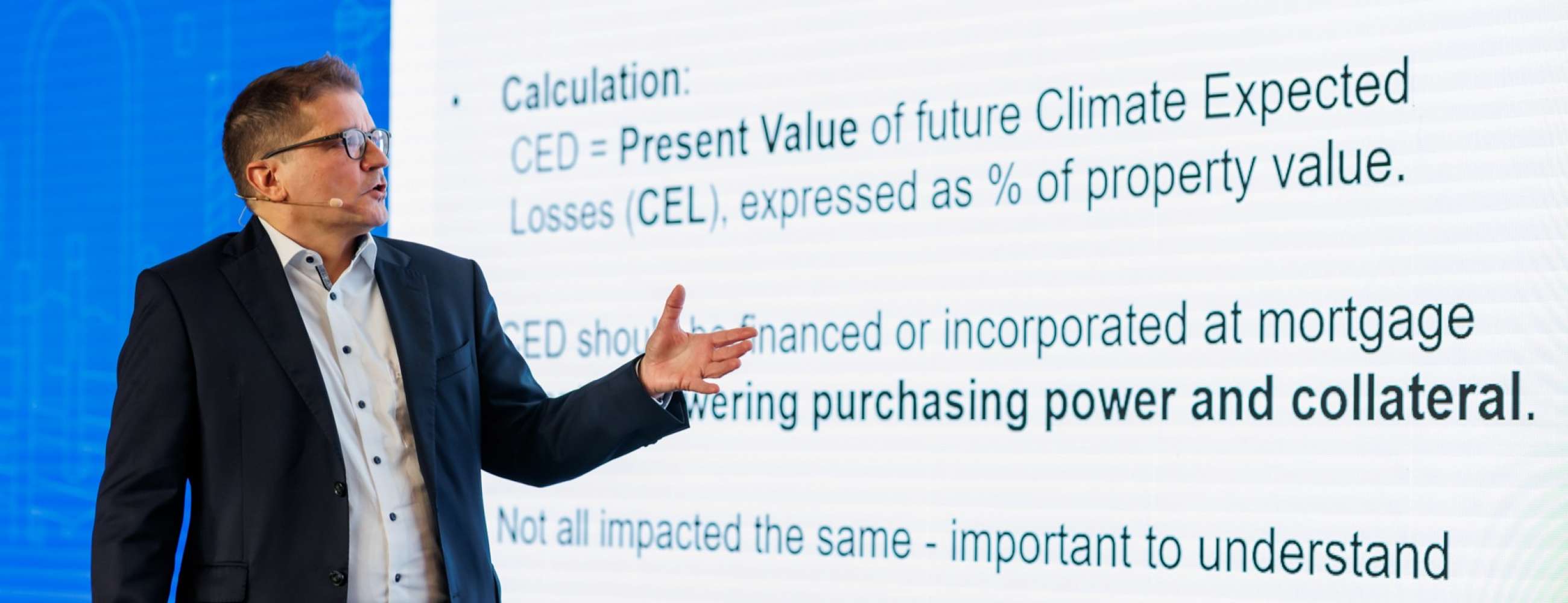
Steffen Hinss, Climate Finance Expert at Munich Re, brought the discussion to the pressing issue of climate risk. “The heat is on,” he warned. Floods, wildfires, hurricanes, and rising seas are no longer rare events. Losses now exceed $200 billion for taxpayers and investors, and non-peak perils — such as extreme rainfall and heat — are increasingly significant.
Investors face four choices: accept, avoid, adapt, or transfer risk. Steffen emphasised that insurance alone will not protect real estate portfolios. Effective adaptation starts with understanding the system at both property and community levels, using science-based models to measure risk, and taking concrete action to protect assets.
Investment in adaptation is not just prudent, it pays: in the UK, £1 spent on adaptation avoids £8 in losses; in Australia, A$1 avoids A$11. The message was unambiguous: climate resilience must be integrated into every investment decision.
Audience polls:
How has your focus on physical climate risks changed within your property portfolio in the last two years?
- Increased - 56%
- Stayed about the same - 41%
- Decreased - 2%
- Not a current focus - 2%
How concerned are you about insurance availability and affordability for your assets over the next 3–5 years?
- Very concerned - 11%
- Somewhat concerned - 33%
- Slightly concerned - 33%
- Not concerned - 23%
- Not relevant to my portfolio - 0%
The wisdom of psychopaths: how to be fearless and focused (Kevin Dutton)
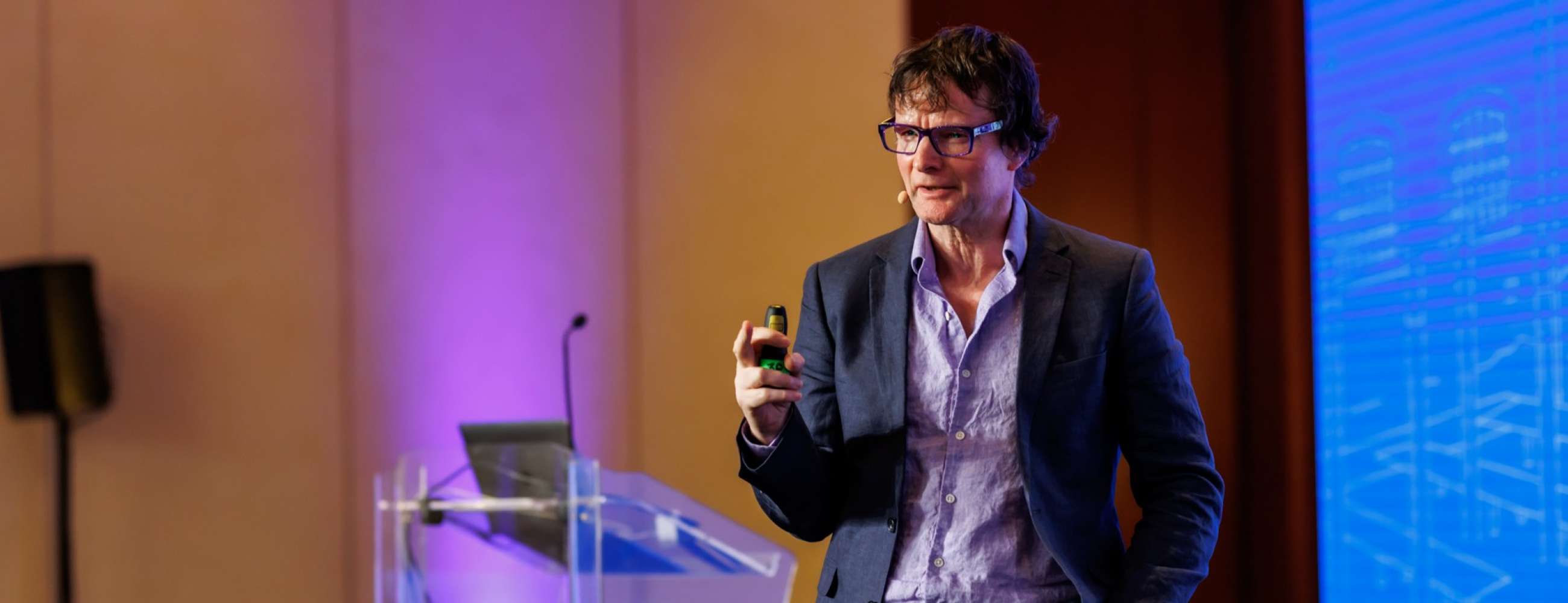
Kevin Dutton, psychologist and author, closed the conference with a fun and thought-provoking keynote. He challenged delegates to consider what we can learn from psychopathy — not in a sensational sense, but to cultivate fearlessness, focus, and unconventional thinking.
Psychopaths are often ruthless, fearless, self-confident, and emotionally detached. Surprisingly, some of the most psychopathic professions include CEOs, lawyers, media professionals, surgeons, and even clergy. Kevin highlighted traits that drive success in high-pressure environments: extraordinary focus, heightened observation, and the ability to discern truth from deception.
He invited the audience to reflect on their own traits and consider how adopting these characteristics — in moderation — could enhance decision-making, leadership, and professional effectiveness. It was a playful, insightful way to end a day rich with practical and strategic lessons.
Presentations
A special thanks to our conference moderator, Andrea Carpenter, Founder of Diversity Talks Real Estate, who skilfully navigated the day's proceedings, engaged speakers with insightful questions and ensured everything ran seamlessly.
Thank you to our sponsors

Gallery
Save the date for 2026
Mark your calendars for next year's Autumn Conference on 23 and 24 November 2026 in Copenhagen.