

Discovering new indices for peer groups
Transparency has always been at the heart of what we do at INREV. As markets evolve and investment strategies become more specialised, so too must the tools we use to understand them. One of the clearest examples of this evolution is our journey from developing broader market indices to building truly comparable peer group indices.
The journey goes beyond data. It is about giving investors and managers clearer reference points, like-for-like comparability, and greater confidence in decision-making.
Laying the foundations, from vehicles universe to fund indices
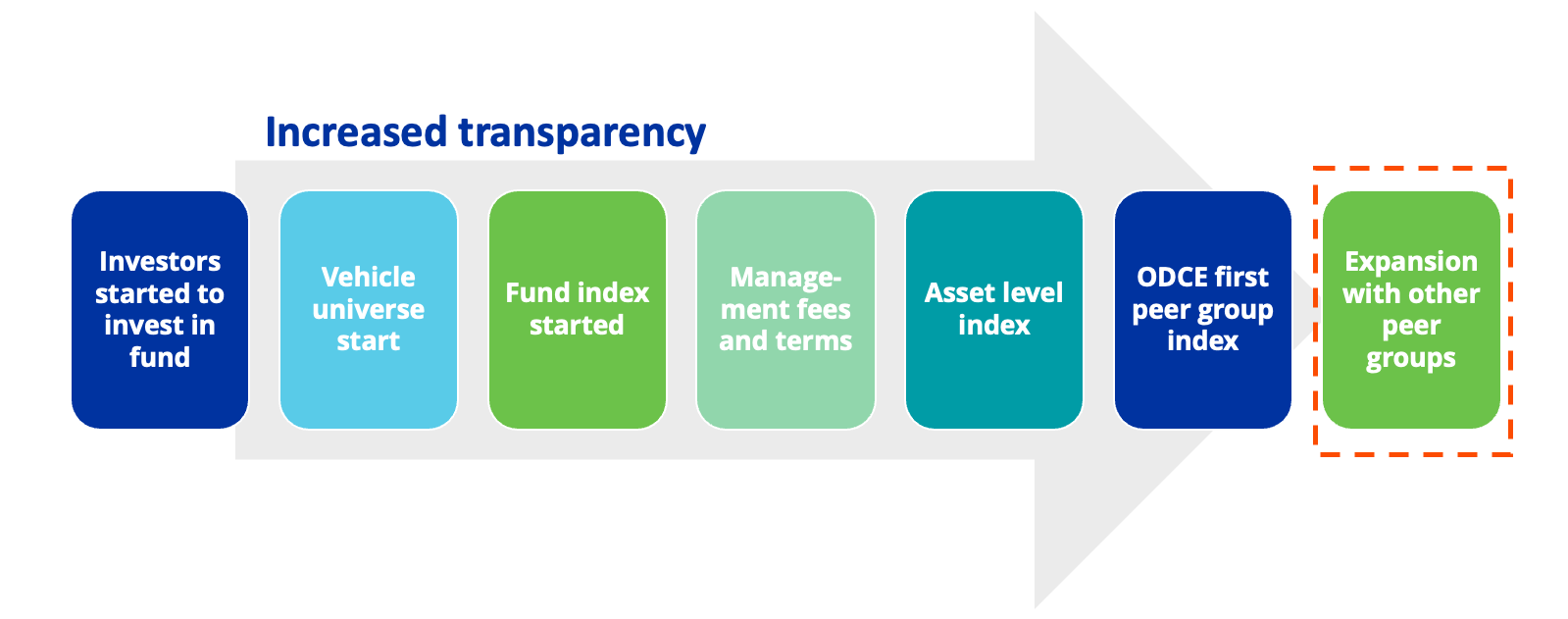
At the start of the century, institutional investors increasingly accessed European real estate through non-listed fund and vehicle structures. With this shift came a pressing need for transparency. INREV responded by creating the Vehicle Universe, a database of vehicles active in the market, providing essential descriptive information where little existed before.
The next step followed naturally. In 2005, INREV launched its first annual European Fund Index, similar to the existing indices that were already available by NCREIF in the US. This was a major milestone for the European non-listed real estate industry, offering a consistent, independent view of fund performance across markets.
As members' needs evolved, so did the index suite. Quarterly reporting was introduced with the INREV Quarterly Index, to support more frequent performance monitoring. Additional studies, like the Management Fees and Terms studies and the Asset Level Index, were introduced, helping members to make better-informed investment decisions.
More choice, more precision with sub and custom indices
Over time, it became clear that investors and investment managers needed even more granularity. Beyond sectors and countries, to fund style and structure, from core and value added to open and closed end. This led to the development of the INREV Fund Index Analysis Tool, enabling members to create tailored custom indices.
By combining the existing subindices with filters such as fund domicile, vintage, gross asset value and gearing level, members could analyse performance with far more precision, creating unlimited indices, while still meeting strict confidentiality requirements.
This represented a significant step forward. But also highlighted one important limitation; even highly customised and granular indices do not always provide a like-for-like comparison of investment strategies, as well as reporting consistency.

*Only available in INREV Fund Index Analysis tool
A turning point, ODCE the first peer group index
The growing need to shift from market-level performance measurement to strategy-level benchmarking marked another milestone for the industry. In 2019, INREV launched the ODCE Index, the first true peer group index.
The ODCE Index is a fund-level index which covers the performance of the Open End Diversified Core Equity institutional non-listed real estate funds with a strategy to invest across Europe and across multiple sectors. What makes it different is not just the strategy alignment, but the level of additional transparency and reporting consistency required to participate. A true peer-group index, allowing comparison on a like-for-like basis. Beyond enhancing transparency, the performance of similar mandates helps to identify return dispersion within strategies. Therefore, not only should the strategies and structures be aligned, but also the reporting basis should be consistent.
For the first time, a European peer-group index applied high, harmonised reporting standards, including the requirement to report on an INREV NAV basis, including mark-to-market valuation of debt.
For investment managers, ODCE provides a clear positioning for a specific market investment product as well as high-performance measurement standards. For investors, this also increased oversight on the funds participating, and more transparency when evaluating the performance of individual funds and the market segment.
Since its launch, the ODCE offering has continued to expand, with new products such as the recently launched asset-level results at index level, a dedicated management fees study and the ODCE Flash Report, further strengthening transparency for both investors and managers.
Looking ahead: introducing new peer groups, together with members
Building on the success of ODCE, INREV is working with members to develop additional peer group indices.
Based on an initial assessment, potential additional peer groups could be Dutch Living funds, pan-European Living funds, pan-European industrial funds and country-specific funds such as UK balanced funds.
Not every segment will be suitable. Peer groups must be sufficiently large, meet high and consistent reporting standards and the demand for increased transparency. But when these conditions are met, peer groups can play a powerful strategic role in improving transparency and comparability across the industry.
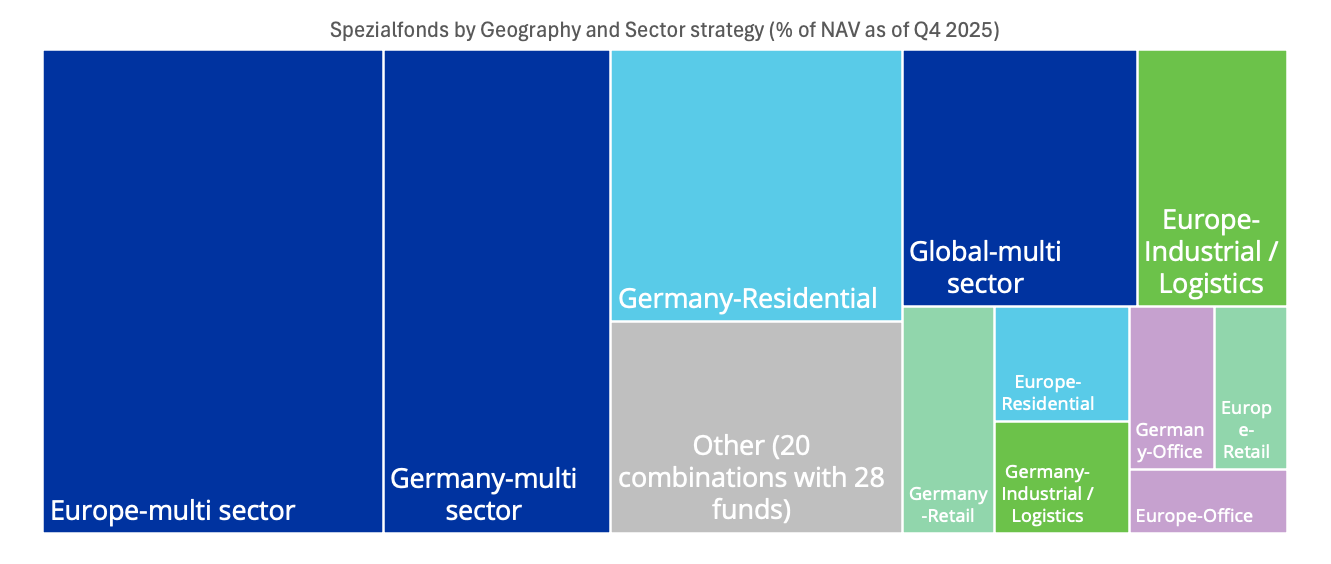
The move from market-level indices to peer group indices represents a step forward for the industry. But this evolution depends on member engagement. Which peer group would add the most value to you? Vote now in the poll.
We want to hear from you. To share your thoughts, reach out to research@inrev.org.